|
|
|
|

|
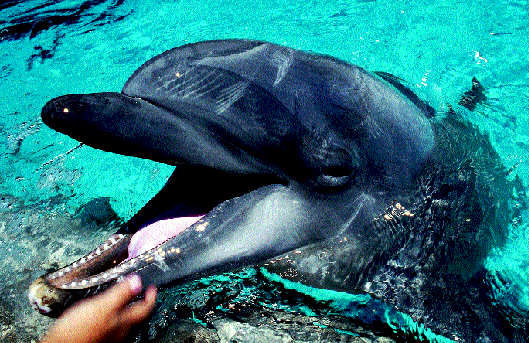
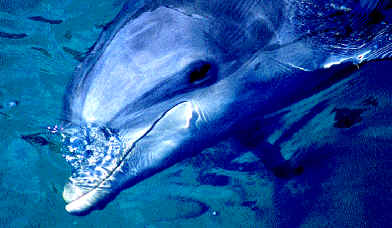
They not only captivate children and people who love the sea. They are beguiling, friendly and intelligent. Many people consider them man´s other best friend. Nevertheless, dolphins are at risk of being exterminated by man.
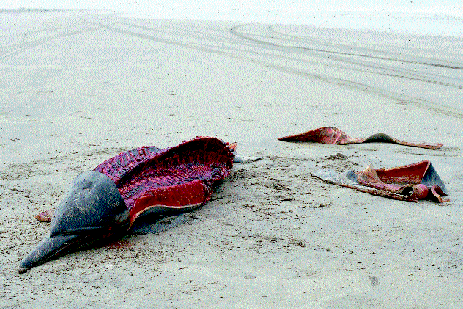
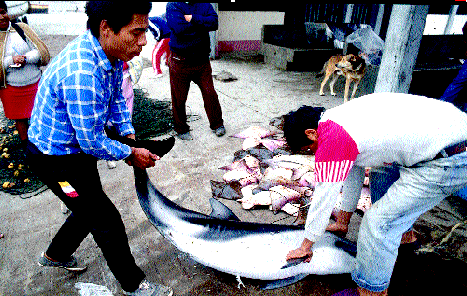
When dolphins first come to mind, it is probably an image of sea creatures with grinning faces doing spectacular leaps in the open sea. Dolphins, porpoises and their giant cousins, whales, belong to the species scientifically known as cetaceans. Unlike sea lions that bask in the sun, dolphins are marine mammals that live entirely within their watery environment. Scientific evidence shows that these animals once walked the earth, but slowly adapted to aquatic life and made their home in the sea between 55 and 60 million years ago. Cetaceans are found in all the oceans. Some species are very evasive and rarely seen, while others are much more conspicuous by nature, jumping above the ocean surface. There are nearly 80 classified cetaceans species, each with a different size, shape, color, and even dental structure. Dolphin species range from small porpoises that measure nearly two meters to the killer whale--actually a dolphin--that measures up to 9.5 meters. The beaked dolphin measures between 6 and 14 meters and generally has only two teeth in its jaw. Exactly when dolphins first became a commercial fish is uncertain. Around 1960, there were sporadic reports of dolphins and porpoises becoming snared in fishing nets and being sold for human consumption. The sale of dolphin meat began to take off in the early 1980s. For the first time, important biological information on the dusky dolphin and the Burmeister porpoise has been collected. We now know that dusky dolphins along the Peruvian coast reproduce from July to October and feed primarily on anchovy. We have learned that bottle-nosed dolphins live in groups in specific areas and that their numbers are few. Large-scale capture could easily affect the species. This information helped produce the first specific measures aimed at protecting dolphins in Peru. In 1990, the government passed legislation prohibiting the capture, processing and sale of dolphins. The law, however, did not meet with the expected results. A 1993 inspection of ports and coastal fish markets found that between 15,000 and 20,000 dolphins were being captured annually. Under current law, the capture and sale of dolphins, porpoises and other minor cetaceans is prohibited and fines for infraction include prison terms up to three years. Yet spot checks performed this year found that the sale of dolphin meat continues. What can be done to diminish the capture of dolphins? Measures proposed include the use of electronic alarms on fishing nets or the closing down of fish companies that violate the prohibition. Laws protecting dolphins may reduce their deliberate capture, but another problem is their accidental entrapment in fishing nets. Hundreds of dolphins are snared and die in the nets used for commercial fishing, though little is being done to address this problem. "If you've seen a dolphin riding the waves, and then later looked into the eyes of a dead dolphin with its body cut to pieces, you'd feel the need to take action," says Nina Pardo, president of the Blue World Association. Together with Sergio Bambaren, author of the best seller The Dolphin and vice-president of the organization, the Blue World Association is tackling problems such as pollution, harmful fishing methods and the extinction of marine species. "1998 was the International Year of the Ocean, which demonstrated the growing concern for the future of the planet's oceans. The principal challenge is raising public awareness regarding the sea's magnificent riches and the importance of protecting marine ecosystems," says Pardo. |
By Julio C. Reyes
Volume /Issue 16, Page 56
[Top of Page]
http://www.rumbosperu.com